For forces deployed on long missions, one of the first priorities is to build a defensive perimeter around their base – a safe haven from which they can operate. That usually means flying in or shipping heavy concrete T-walls from Europe. Once on site, the barriers still need heavy vehicles to install and can take weeks to put in place.
For example, Camp Marmal, the Regional Command North during the ISAF mission in Afghanistan, hosted around four thousand troops. It was protected by around eight kilometres of T-walls. Together they weighed roughly 47,000 tonnes. Moving that mass from production centres in Europe and the United States cost between €30 and €60 million, the equivalent of transporting eleven Leopard 2A6 Main Battle Tanks.
“Reducing the logistics footprint brings benefits beyond cost savings. It also makes operations more efficient,” said Giuseppe Dello Stritto, Head of the Land and Logistics Unit at EDA. “Building T-walls directly on the spot would free troops who otherwise protect the transport and construction of the walls all around. Instead, they can focus on their main operational tasks.”
Build the wall, destroy it and measure the impact
Standard T-walls are usually made in Europe in forms filled with heavy concrete and steel bars. After drying out, the voluminous segments are transported to a storage house where they harden and wait for deployment.
By contrary, additive manufactured, also known as 3D printed, T-walls only need raw source materials on the spot, such as water and concrete-based mixes and a device that distributes the layers of liquid concrete to the ground. These walls can be customised. They can be thicker, taller or take more tailored shapes to fit exactly the operational needs. They can also harden on site, without the need of a storage house. Most importantly, versatile 3D printed T-walls could offer equivalent or even better protection for the soldiers.
In 2025, EDA’s project began to trial 3D printed T-walls and develop a model. The Agency partnered with researchers, military experts, industry and the French Defence Infrastructure Service for cheaper, lighter and easier to build T-walls.
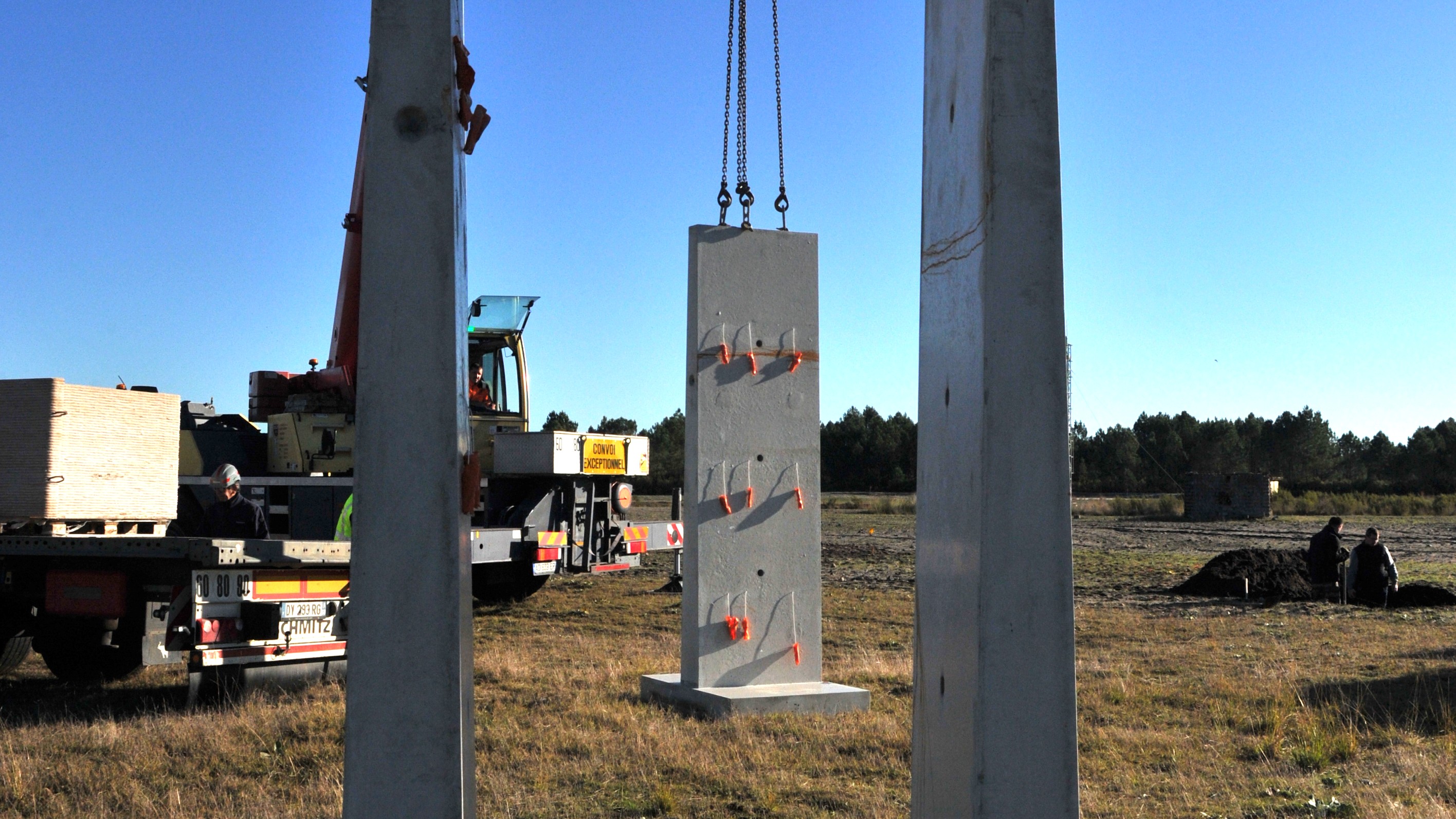
The first full-scale test took place in November 2025 at the Captieux shooting range in southern France. The objective was to verify the effective protection of printed T-walls and document the results, both during and after the blast. The team used explosives of increasing size to test the reaction in direct contact and 15 metres in front of the wall.
When an explosion hits a concrete wall, it triggers a secondary effect that scatters steel and concrete far beyond the point of impact. These flying fragments can reach the speed of 1,000 km/h, turning the walls meant to shield soldiers into a liability.
With additive manufacturing, strong, lighter T-walls could be built as barriers, and limiting the risk of debris in case of an attack. That could simplify military logistics dramatically.
“At first glance, the results are very promising,” says Danny Heerlein, Project Officer for Counter-Improvised Explosive Devices at EDA. “We measured how quickly these T-walls can be built, how they react to a blast and we mapped the secondary effects. The team from the French Defence Infrastructure Service will now analyse the data.”
3D printed future
3D printed concrete walls cannot yet offer the same protection as a traditional T-wall. But the hope is for faster, safer, cheaper T-walls thanks to 3D printing.
“These tests do not only help us evaluate, understand and improve the 3D-printed T-walls,” said General Christophe Hardy, Director at the French Defence Infrastructure Service, Expertise and National Production. “But even if the innovation seems promising, we need to be totally sure that it will protect soldiers to the highest standards before the actual deployment.” 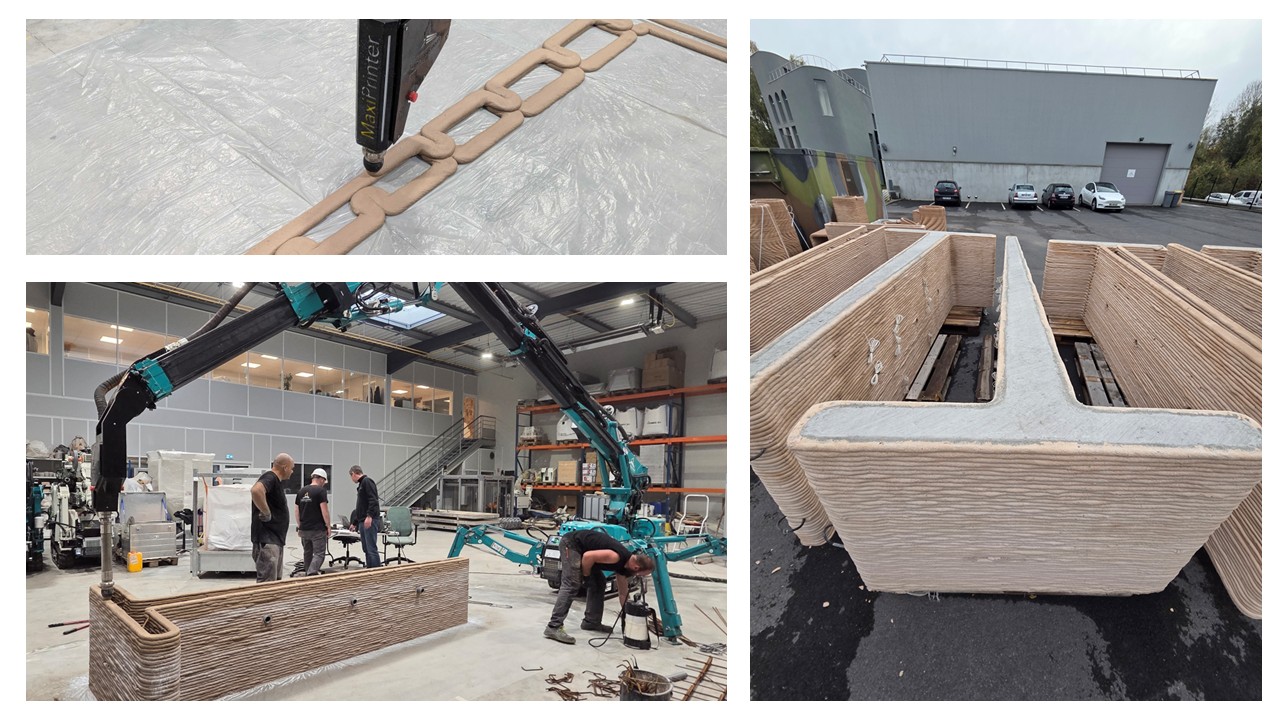
The next phase of the EDA project will focus on running a series of virtual simulations using data from the 2025 tests. These computer-based models will help optimise the design and materials for 3D printing. EDA aims to involve Member States directly, as their feedback will play a crucial role in defining the operational requirements.
A second blast experiment is scheduled for 2027. If successful, the project will deliver not only a deployable model for cheaper and more robust T-walls, but also a foundation for more complex 3D-printed battlefield structures, such as watchtowers or bunkers.
Over time, the application of this technology could extend beyond military operations. 3D-printed walls could protect critical infrastructure, including power plants, hospitals, and airports on European territory.
To learn more about additive manufacturing in defence, listen to the Episode 4 Season 3 of the EU Defence Declassified Podcast.