The European Defence Agency (EDA) will organise new operational exercises in 2027 to help develop two Drone Technology Hubs. These pilot hubs are the first step towards a European network aimed at bringing drone and counter-drone innovation to armed forces faster.
The hubs stem from the EU's Priority Capability Area on Drone and Counter-Drone Systems (PCA DCDS), one of the nine areas where EU leaders want faster progress towards achieving defence readiness by 2030. Latvia, the Netherlands, Croatia, Denmark and Spain are the lead nations of the PCA DCDS. The hubs also fall within the European Defence Project of Common Interest DECODER.
The first hub will be established in Selonia, Latvia, where EDA and the Latvian armed forces organised the first European drone pilot training in June 2026. The hub will focus on aerial and ground drone and counter-drone technologies, including the detection, identification, tracking and defeat of unmanned systems. The second will be in Scheveningen, the Netherlands. It will address maritime and seabed security, in particular shallow-water counter-unmanned maritime systems.
Both hubs will have EDA support and will follow a common approach, connecting operational requirements, innovation, testing, evaluation and standardisation. Operational experimentation will play a central role, with the aim of moving towards more coordinated testing approaches and, where appropriate, common test methodologies and mutual recognition of test results.
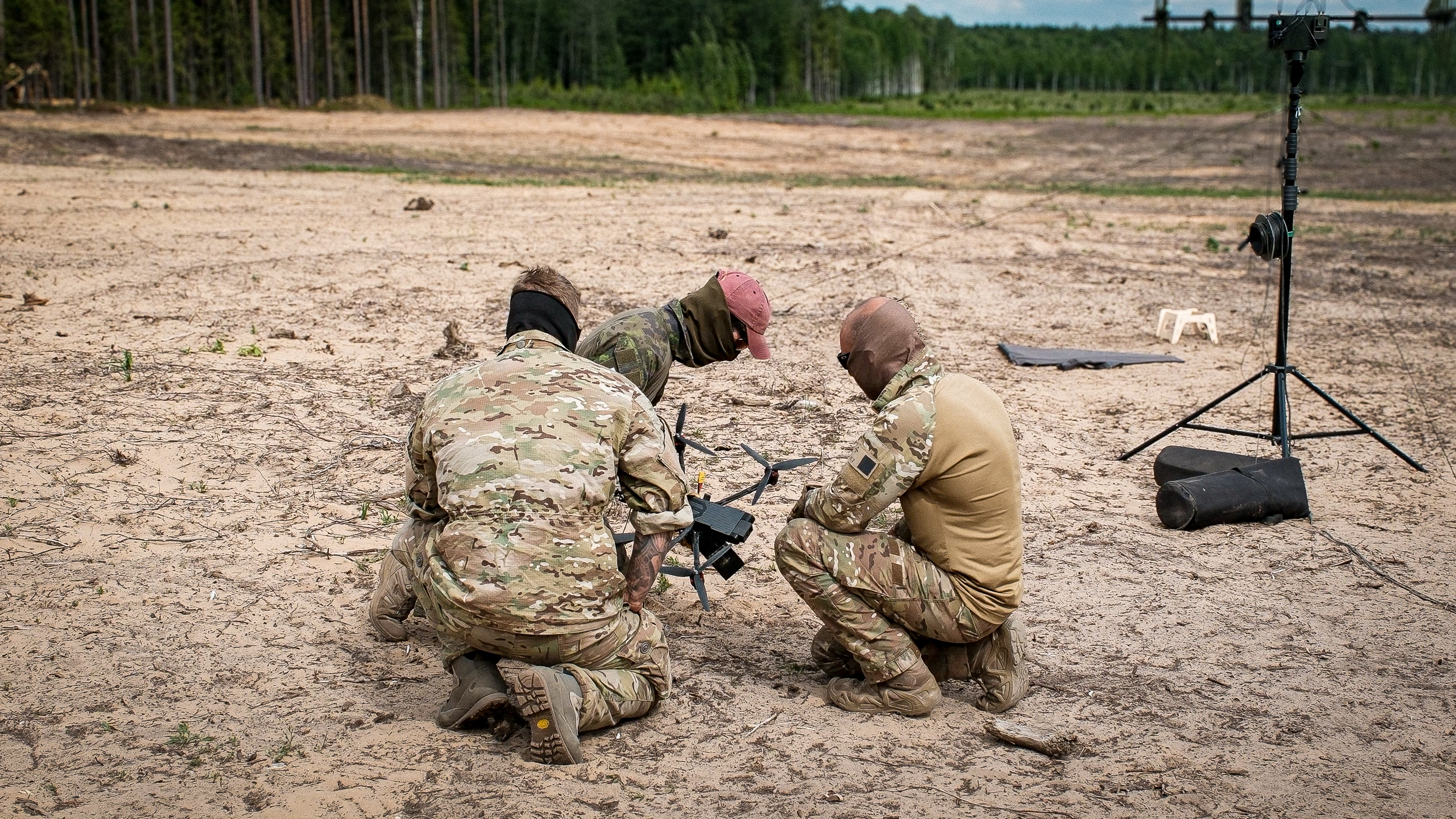
Practical spaces to test and learn
Operational experimentation is becoming a central activity for EDA, following similar work in Italy, Portugal and Switzerland in 2025 and 2026. It will also be at the heart of EDA's new Centre for European Defence Innovation (CEDI), which will be established within the Agency in November 2026.
Technology is evolving faster than traditional development and procurement cycles can accommodate. The hubs will give EU Member States, industry, research organisations and operational users practical environments to develop, test and evaluate new concepts under relevant operational conditions. Lessons learned will then be shared across the European community.
The pilots will also deepen cooperation between the EU and NATO, with the hubs co-located with NATO innovation ranges. Test methodologies, technical insights and other findings can be shared and aligned across both communities, following the principle of maximising complementarity, avoiding unnecessary duplication and ensuring interoperability by design.